
AI LEGO design
Using AI to design LEGO in 2026
AI can already help turn images, prompts, and 3D files into LEGO-compatible brick models. The hard part is making those models physically buildable, visually recognizable, and practical to edit.
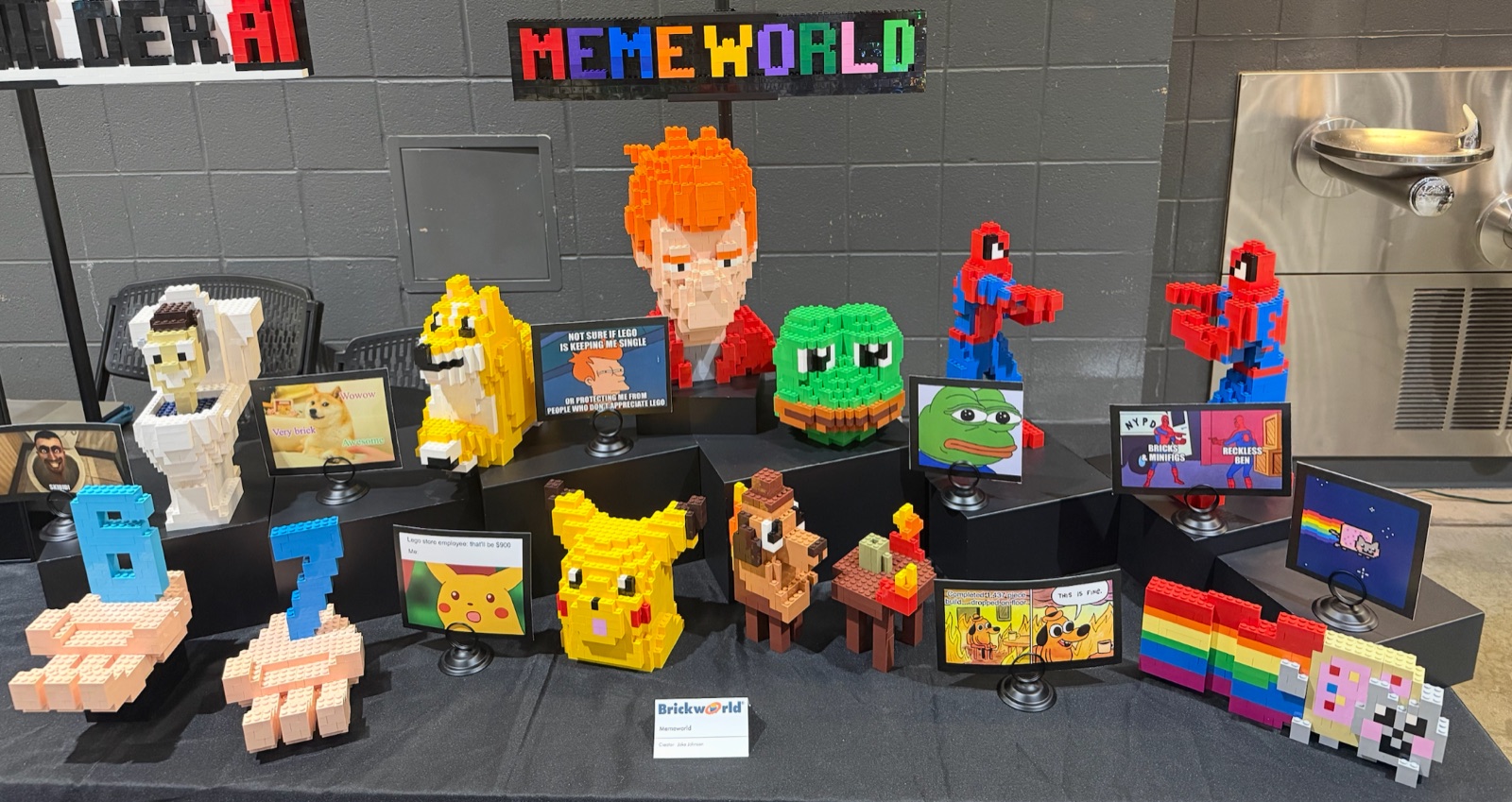
This article is adapted from my BrickWorld 2026 presentation, Using AI to Design LEGO. The talk was meant as a high-level landscape overview: where AI LEGO tools came from, what works today, what breaks, and where the next wave of tools is likely headed.
BrickBuilder AI sits in that same practical space. The goal is not just to make a picture that looks like a LEGO model. The goal is to create a LEGO-compatible design you can inspect, scale, edit, and turn into real building files.
The LEGO construction problem is older than modern AI
Long before image models and large language models, LEGO designers had a practical geometry problem: given a 3D body, how can it be built from LEGO bricks? LEGOLAND master model builders historically relied on careful manual iteration to turn large sculptures into buildable brick structures.
Research into this problem goes back at least to Gower et al. in 1998, which explored automatically constructing LEGO models with regular bricks. Since then, papers have studied voxelization, graph theory, greedy fill algorithms, genetic algorithms, and critical region detection. The core question has stayed surprisingly consistent: how do you turn a continuous 3D shape into discrete parts that actually connect?
Why LEGO is a good place to test AI design
Generating real-world objects with AI is still hard because the output needs to be assembled from standard components and remain physically stable. A visually convincing design can still contain floating, disconnected, or collapsing pieces.
LEGO-compatible bricks make the problem easier to study without making it trivial. Parts are accessible, the results are reproducible, and the constraints are concrete. If an AI system cannot reliably build with LEGO bricks, it is not ready to design more complex real-world assemblies.
The common 2026 pipeline: image to 3D to LEGO
The most practical AI LEGO workflow today starts with image generation or image-to-3D. Tools such as SAM3D, TRELLIS, Meshy, and other modern 3D generation models can turn a prompt or image into a mesh. From there, a voxelizer converts the model into a grid, and a voxel-to-brick algorithm maps that grid into LEGO-compatible bricks.
This approach works well enough to make quick prototypes, but it has clear limits. Many outputs rely mostly on basic brick shapes. Color matching can drift because generated textures do not map neatly to available LEGO colors. Downsampling also loses detail, especially for faces, logos, thin features, and small character shapes.
Editors still matter
A voxel editor or brick editor can fix many of the rough edges in the image-to-3D-to-LEGO pipeline. Editing lets a builder clean up color mapping, restore details lost during downsampling, and remove unstable or disconnected regions before generating instructions.
That editing step is one reason AI LEGO design in 2026 feels less like a single magic button and more like an assisted design workflow. AI can get you to a starting point quickly, while human judgment still matters for taste, scale, and build quality.
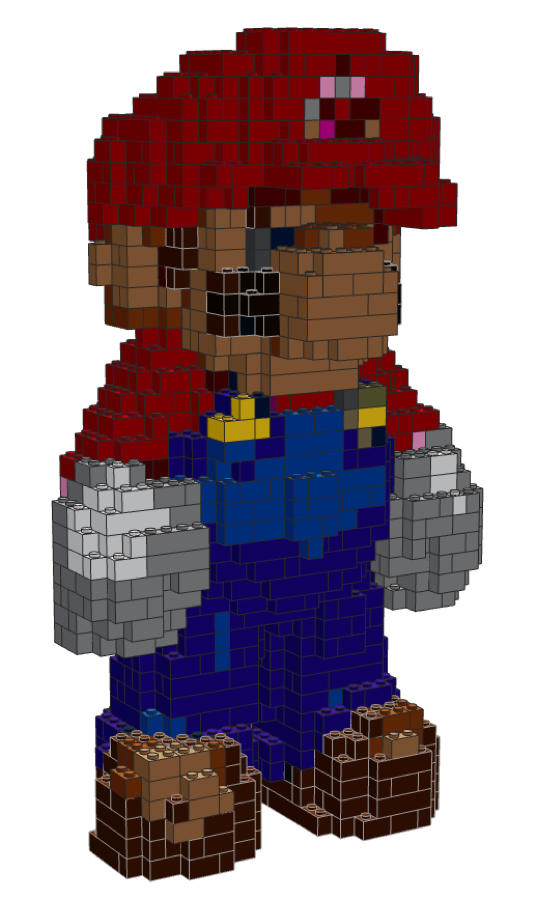
Before
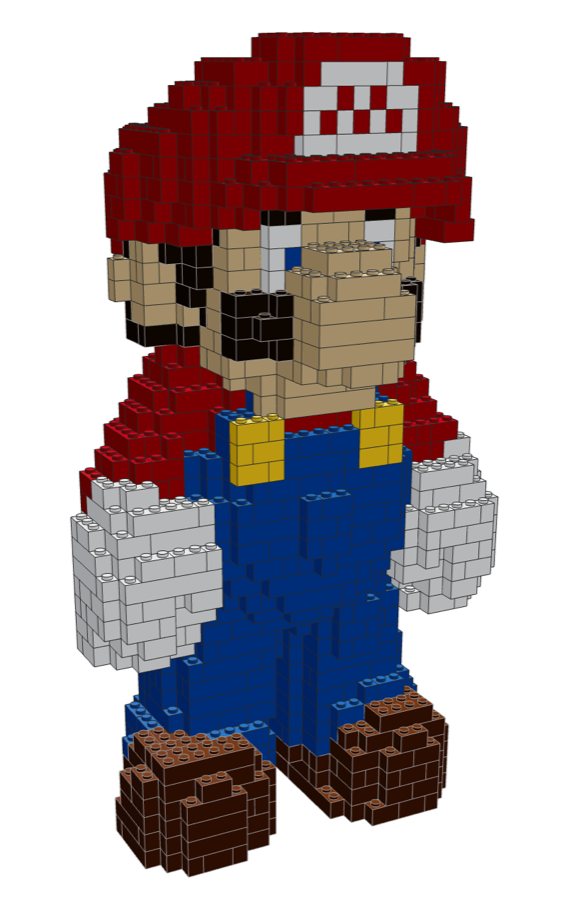
After
Native LEGO generation is emerging
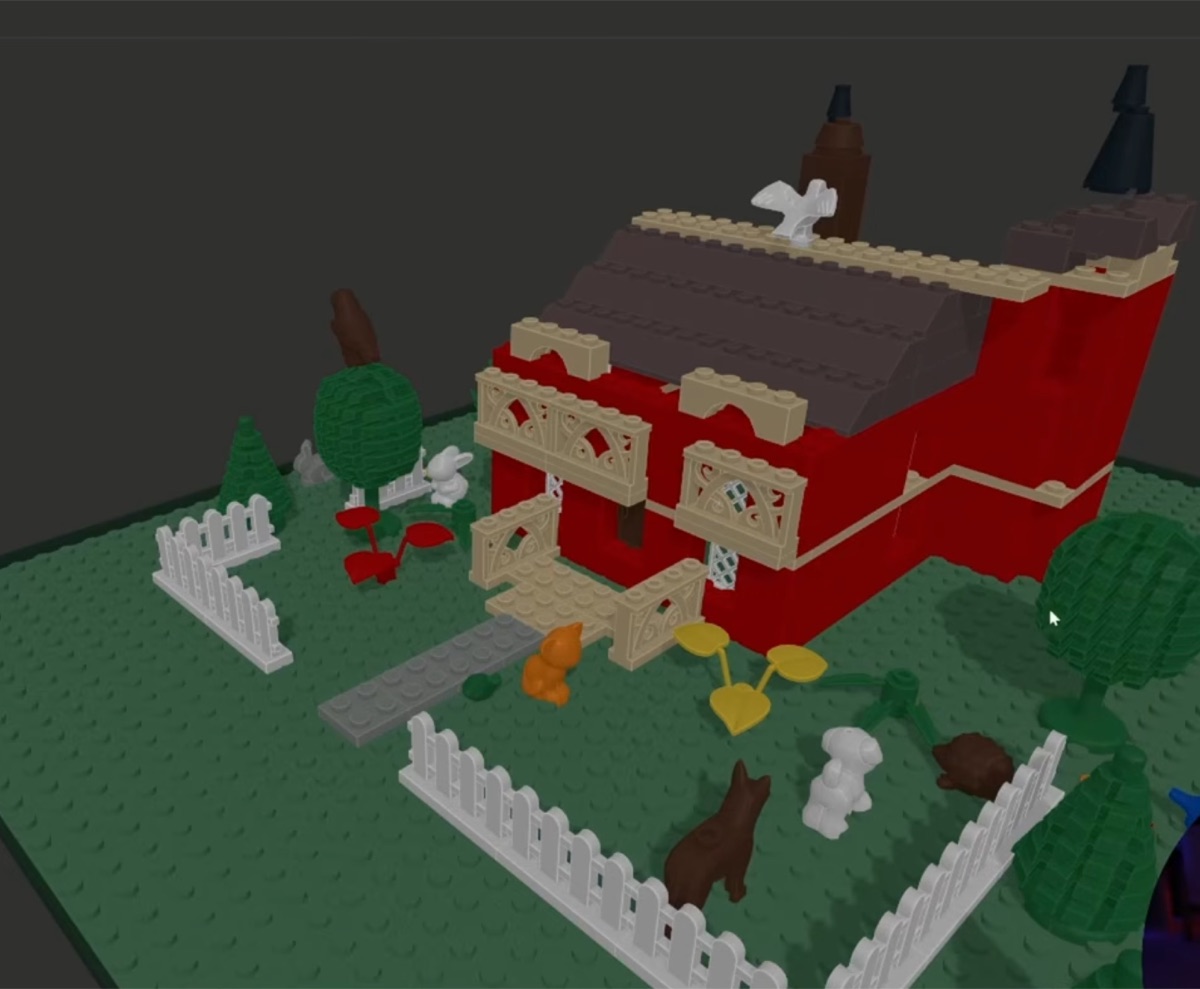
Another direction is to generate bricks directly instead of converting a finished mesh. Some experiments use LLMs with spatial reasoning or tool access, including MCP-style workflows for creating brick layouts. These are interesting, but general-purpose LLMs still struggle with reliable 3D spatial constraints.
More specialized systems are starting to copy the autoregressive playbook from language models. BrickGPT, LegoACE, and LEGO-Maker style approaches tokenize LEGO parts or brick layouts, then train models to predict the next brick or token from context. This is closer to how modern language models predict text, but applied to brick structures.
What still needs to improve
The biggest open problems are dataset size, physical validity, connectivity, and part diversity. Some systems learn constraints implicitly, which means disconnected bricks can still appear. Others perform stability checks after each placement, which improves buildability but can be slow.
Future systems will likely combine better spatial reasoning, larger synthetic datasets, semantically aware image-to-voxel models, custom LEGO-specific generation models, and plugins for tools such as BrickLink Studio. The best AI LEGO builder will probably be an agent that can generate, inspect, revise, and export a model with real build constraints in mind.
Try the workflow
If you want to experiment with AI LEGO design today, start with a clean image, a simple 3D model, or a short prompt. BrickBuilder can help convert that idea into a LEGO-compatible model with a preview, parts data, and files you can continue editing.
LEGO is a trademark of the LEGO Group, which does not sponsor, authorize, or endorse this site.